
When a Bank Sells Longevity: What HSBC's Singapore Move Means for HNWI Clinics
When a Bank Sells Longevity: What HNWI Clinics Need to Know About Operational ReadinessBy Cebuan de La Rochette | June 2026 | AICognitechHSBC now bundles longevity into its private banking proposition, delivered through partner clinics. For any HNWI longevity clinic considering whether this kind of channel is accessible, the answer depends on operational readiness.
When a Bank Sells Longevity: What HNWI Clinics Need to Know About Operational Readiness
By Cebuan de La Rochette | June 2026 | AICognitech
HSBC now bundles longevity into its private banking proposition, delivered through partner clinics. For any HNWI longevity clinic considering whether this kind of channel is accessible, the answer depends on operational readiness.
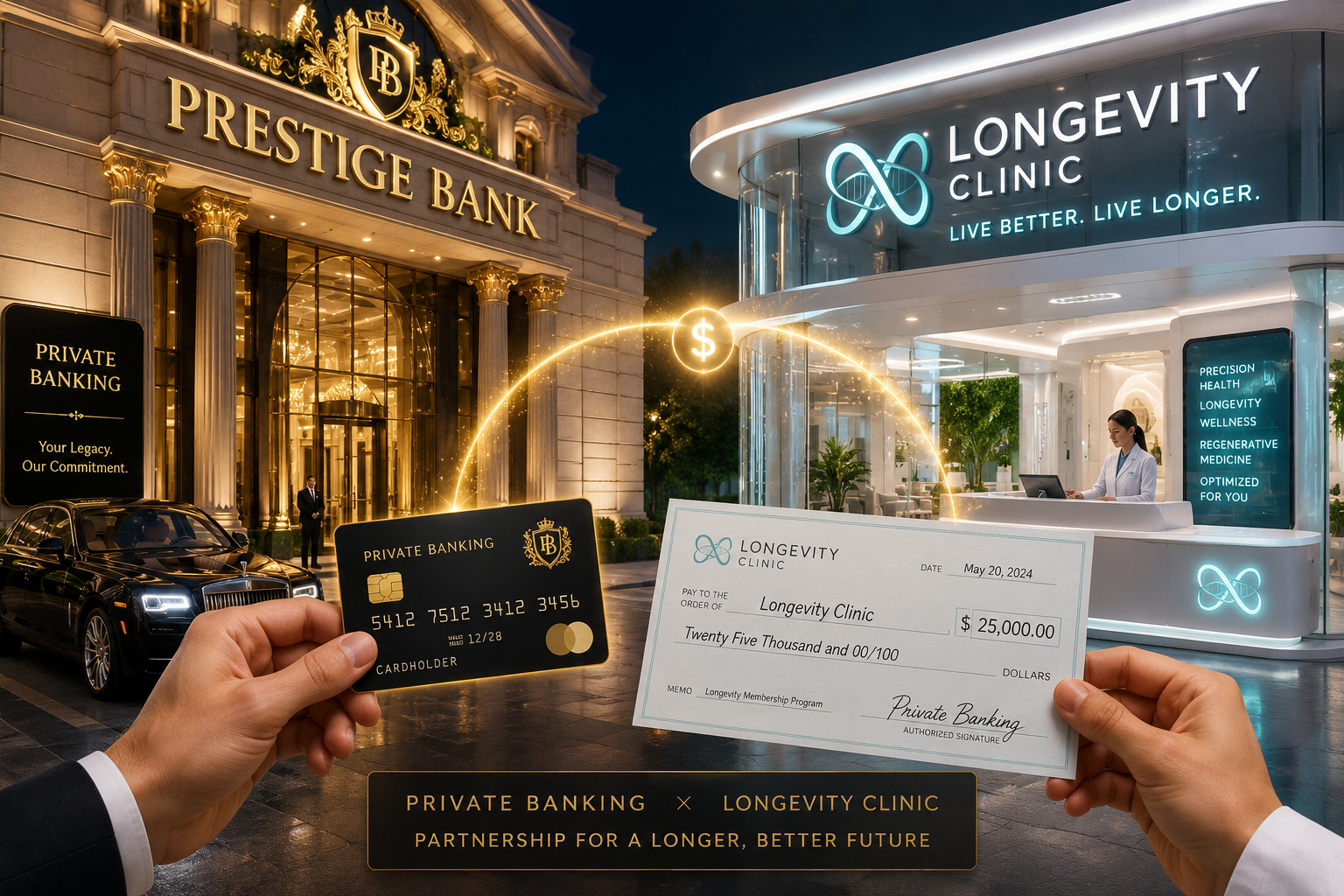
In May 2026, HSBC Premier in Singapore added longevity to its flagship affluent banking proposition. The bank did not build a clinic. It selected partners: IHH Healthcare to run a 24-hour health concierge, and Raffles Medical Group's R17 facility to deliver structured longevity assessments across seventeen health markers. The bank is the distribution layer; the clinics are the chosen fulfilment partners. The question of operational readiness for longevity clinics is the more useful one to come out of this, and it is being asked far less than it should be.
External link: HSBC announcement — https://www.about.hsbc.com.sg/news-and-media/hsbc-launches-singapores-first-bank-led-integrated-health-wellness-and-longevity-offering.
Much of the commentary on this move treats it as banks taking the client relationship away from clinics. From the operational side, that framing misses the point. Banks and wealth managers are becoming a serious acquisition route to affluent longevity clients, and they select the partners who can hold a private banking service standard. HSBC chose two large, structured incumbents. A boutique HNWI longevity clinic or preventive medicine clinic that wants access to this kind of channel faces the same selection test: whether its operations would let it be chosen at all.
What Longevity Clinic Operational Readiness Actually Means
Operational readiness is not a question of clinical quality. The gap I keep running into in this work is the layer underneath: intake, coordination, post-visit follow-up and data handling. Those are the things a premium distribution partner examines before it puts its name beside yours. For most HNWI longevity and preventive medicine clinics, these systems were built around the single-client, direct-referral model. The partnership model demands something different.
Here is what that difference looks like across five areas.
1. Intake That Answers at a Private Banking Pace
When a bank's concierge refers a client, that client expects the same standard of responsiveness they receive from the bank itself. A referral handled in hours through one coordinated flow is a different operation from a web form followed by a callback two days later. Longevity wellness clinics that win these partnerships run one front door, not several disconnected ones.
2. A Programme Legible Enough for a Partner to Describe and Sell
A bank can only bundle what it can explain to its clients. Raffles Medical Group's R17 can be packaged because its longevity assessment is structured and named: seventeen pillars, clear markers, a repeatable protocol. [Link: Raffles Medical Group R17] A service improvised case by case cannot be sold by anyone other than the person improvising it. Productising the clinical offer is what makes a preventive medicine clinic distributable through someone else's channel.
3. Follow-Up That Reports Back
A distribution partner needs to know the partnership is working. A clinic that tracks nothing after the visit has nothing to feed back, and a partner that learns nothing tends not to renew. Structured post-visit follow-up is where most longevity wellness clinics are thinnest, and it is the first thing a bank's due diligence surfaces.
4. Data Handling That Meets a Bank's Compliance Bar
Affluent clients move across borders, and so does their data. A bank will not put its brand beside a clinic that is loose with client information, particularly across jurisdictions. Auditable consent, secure data handoff and clear cross-border protocols are the entry gate for any HNWI longevity clinic looking at private banking partnerships, not a refinement to add later.
5. Capacity to Absorb a Referral Stream Without Quality Dropping
Serving one visiting client well is not the same as serving a steady flow from a bank's affluent base. This is where fragmented clinic operations break under volume they were never built to carry. A distribution partner notices the drop in service quality well before the clinic does.
The Change Worth Registering
None of this is about technology for its own sake. It is about whether the operation can carry a promise that someone else is now making on its behalf. As banks, insurers and wealth managers move into longevity, the HNWI clinics that benefit will be the ones whose intake, coordination and follow-up were already in working order before the partnership conversation began.
This is the work I spend my time on: examining how a longevity clinic actually runs, and identifying where the operational readiness is and is not there, before any larger investment in AI infrastructure is made. [Internal link: EcoMind AI Audit page] A bank runs that assessment informally before it selects a partner. The clinics that fare best are the ones that have already run it on themselves.
If a private bank looked at your operations today, what would it find?
Cebuan de La Rochette is the founder of AICognitech and runs AI operational readiness diagnostics for HNWI longevity and preventive medicine clinics across the EU, APAC and MENA markets.
Frequently Asked Questions:
What does operational readiness mean for a longevity clinic? It means the clinic's intake process, data handling, post-visit follow-up and capacity are structured well enough to be selected and trusted by a premium distribution partner such as a private bank or wealth manager. Clinical quality is rarely the gap; the operational layer underneath it usually is.
Why are banks like HSBC now offering longevity services? Banks serving affluent clients are responding to growing demand for health and longevity as part of a broader wealth proposition. HSBC Premier Singapore launched longevity and health screening benefits in 2026, delivered through partnerships with IHH Healthcare and Raffles Medical Group, as part of its integrated health, wellness and longevity offering for Premier clients.
What makes a longevity clinic attractive to a private banking partner? A bank selecting a clinical partner looks for fast coordinated intake, a productised and describable programme, structured post-visit follow-up, compliance-grade data handling and the operational capacity to absorb a steady referral stream. HNWI longevity clinics that have systematised these areas are more selectable than those that have not.
What is an AI readiness audit for a longevity clinic? An AI readiness audit examines whether a clinic's operational layer, intake, data, follow-up, vendor connectivity, is sufficiently structured to support AI-driven improvement before any investment in new infrastructure. It surfaces gaps that would otherwise make AI adoption costly and unreliable.
Ref: - HSBC announcement: https://www.about.hsbc.com.sg/news-and-media/hsbc-launches-singapores-first-bank-led-integrated-health-wellness-and-longevity-offering.
If any of this reflects something you are navigating inside your clinic, the EcoMind AI Audit is where I start every conversation — a structured look at operational readiness before any investment decision is made.
Audit: https://www.aicognitech.com/service/ai-audit-assessment
Let's Talk: https://calendly.com/aicognitech/30-min-discovery-call

Copyright 2025 AiCogniTech | All Rights Reserved